UX Design Sprint
Aether
A speculative medical UX system designed to restore proprioception and kinesthesia in stroke survivors and combat-injured veterans — built in 3 days at FigBuild 2026. Aether bridges the gap between human intention and physical movement through a synthetic nervous system of wearable hardware and a real-time digital interface.
Project Objectives
- Design a speculative UX system for a complex accessibility need in under 3 days
- Translate neuroscience concepts into an intuitive, trauma-informed interface
- Produce lo-fi wireframes, hi-fi mockups, and a final interactive Figma prototype
- Create a compelling narrative presentation to accompany the submission
Inspiration
Aether was born from the lived experiences of people we love. Watching a parent navigate the silent, disorienting aftermath of a stroke — and time spent as a USAF Veteran witnessing the resilience of combat-injured friends — made one thing clear: recovery isn't just physical. It's a battle to regain a sense of self in a body that no longer "talks back."
We built Aether to be the translator they deserve. Our personas grounded every design decision in real human need.
What Aether Does
Aether is a synthetic nervous system that bridges the gap between human intention and physical movement. It restores proprioception (your body's sense of where it is in space) and kinesthesia (the sense of movement) — two things that can be lost after a stroke or traumatic injury.
The system combines two hardware components with a real-time digital interface:
Vestibular Ear Cuff
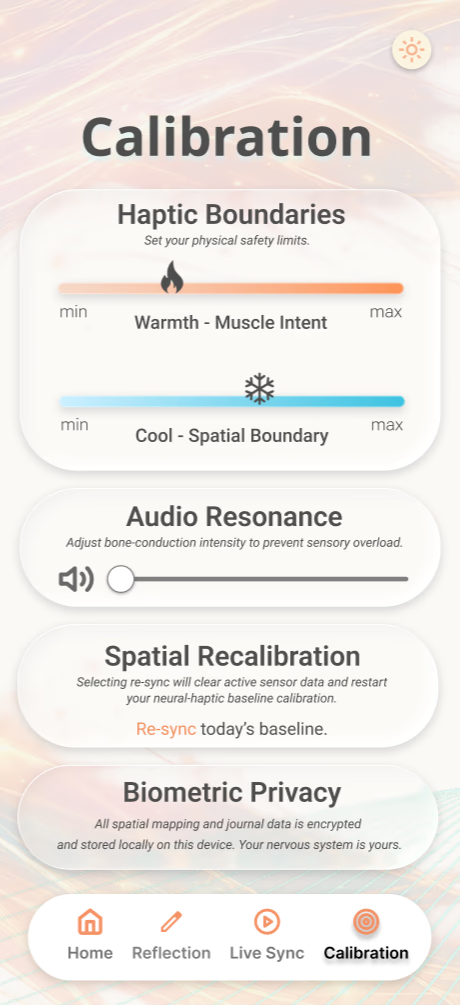
Wearable hardware that provides gentle auditory anchors to help users rebuild their spatial awareness and internal sense of balance.
Thermal Haptic Patches
Body-worn patches that use thermal boundaries to give users real-time physical feedback — translating spatial data into a language the brain can intuitively understand.
Lumen Mode
The active therapy mode — designed for daytime use, supporting intentional movement sessions and guided rehabilitation.
Obsidian Mode
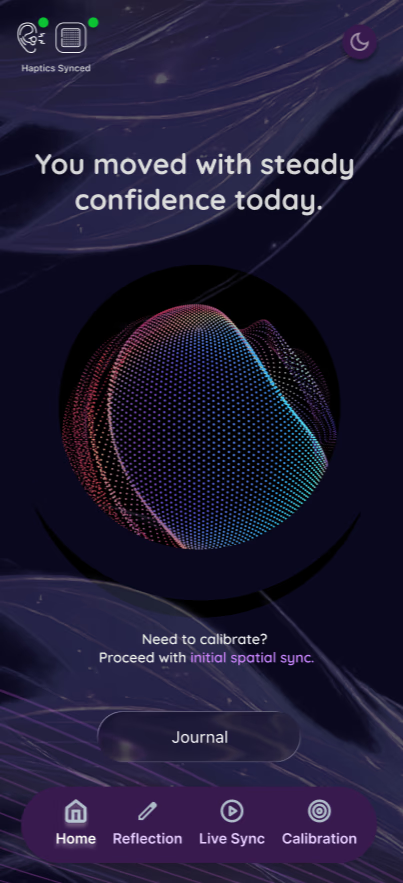
A protective high-contrast theme for evening sensory grounding — reducing stimulation while maintaining proprioceptive feedback for users with sensory sensitivities.
Our Process
Day 1 — Concept & Wireframes
Julie brought the initial concept spark — a synthetic nervous system for people whose bodies had gone "silent." From there, we worked as equals, spending 8+ hours a day collaborating synchronously on Microsoft Teams. We defined our personas, mapped out the system's core functions, and produced lo-fi wireframes to establish the interface's structure and flow.
Day 2 — Hi-Fi Design
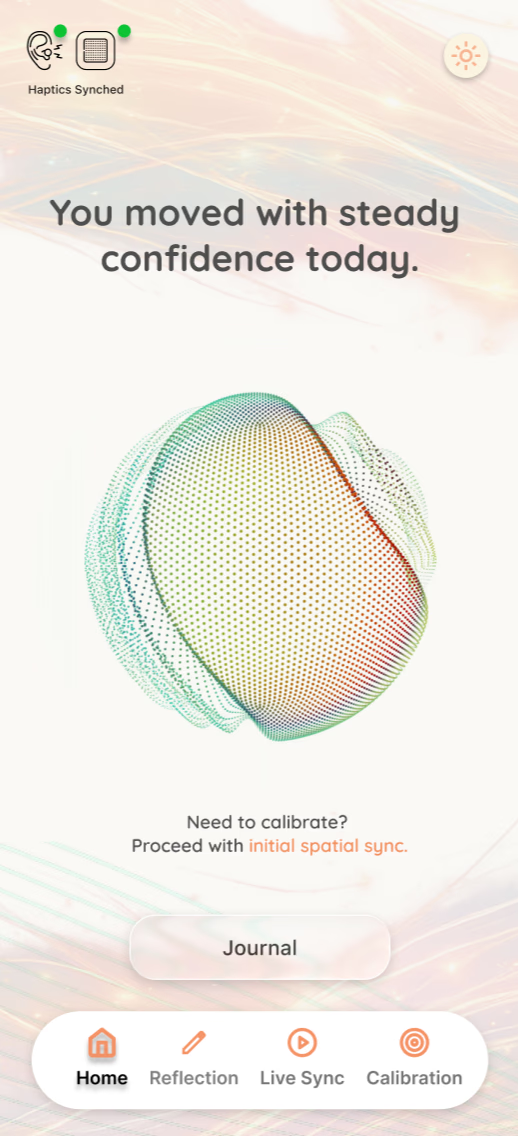
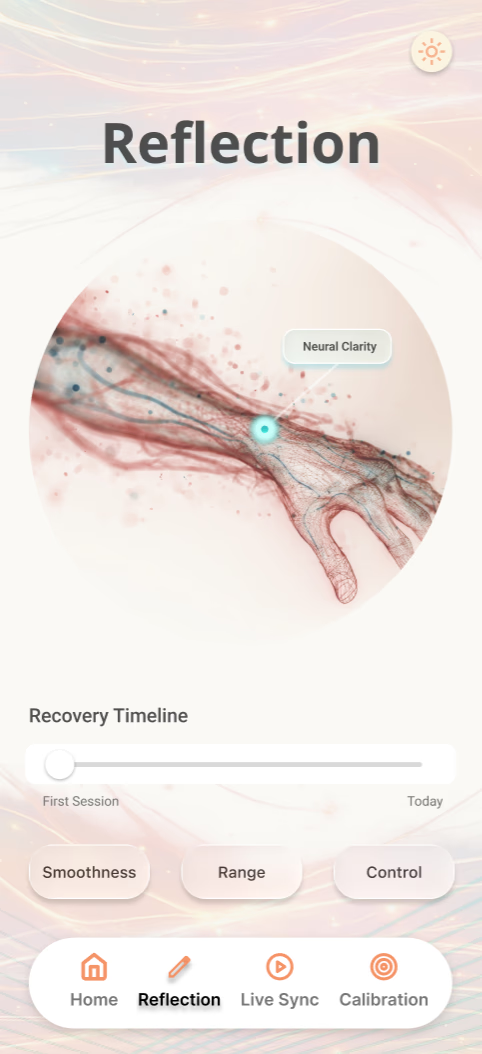
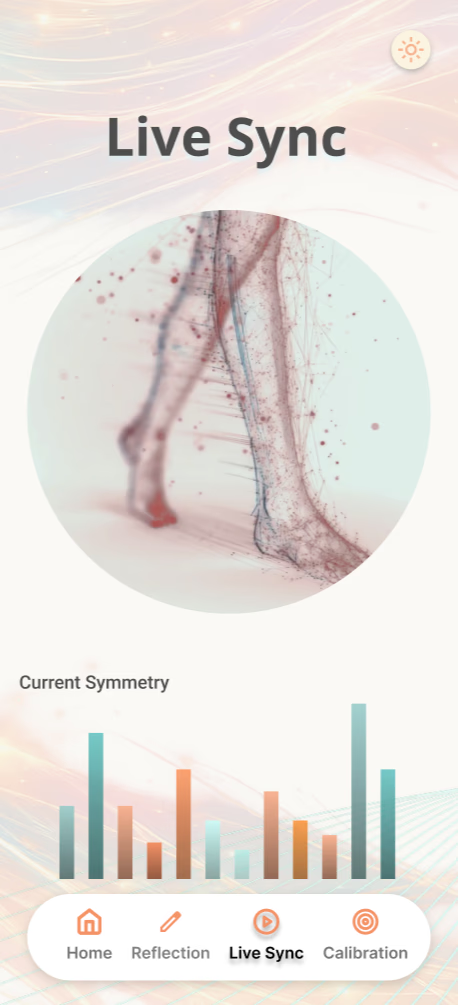
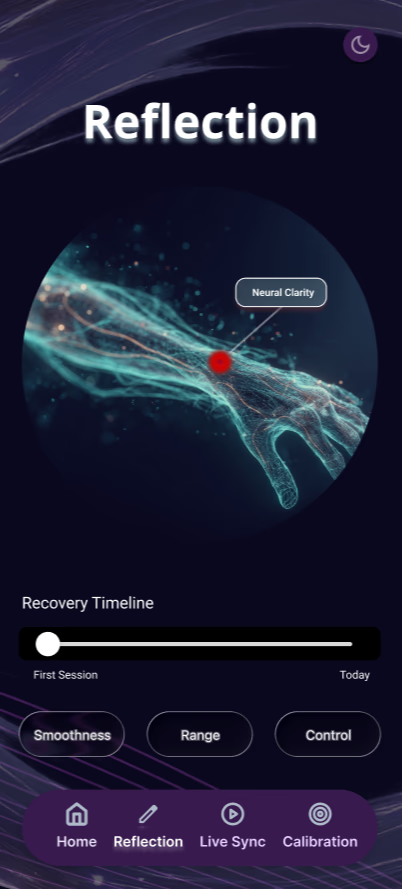
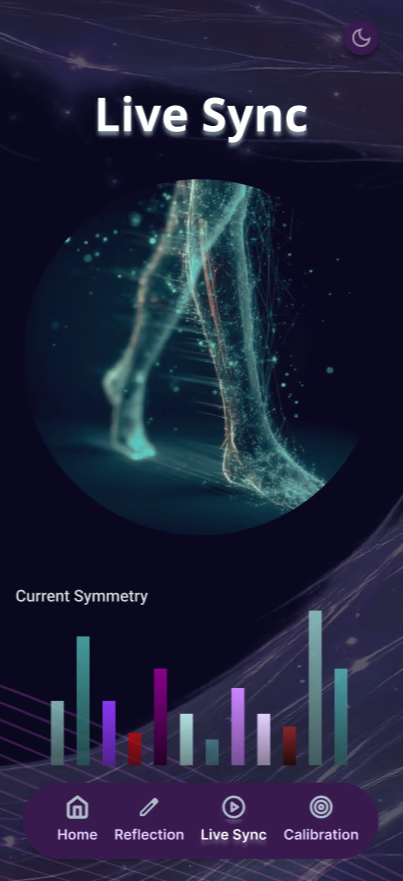
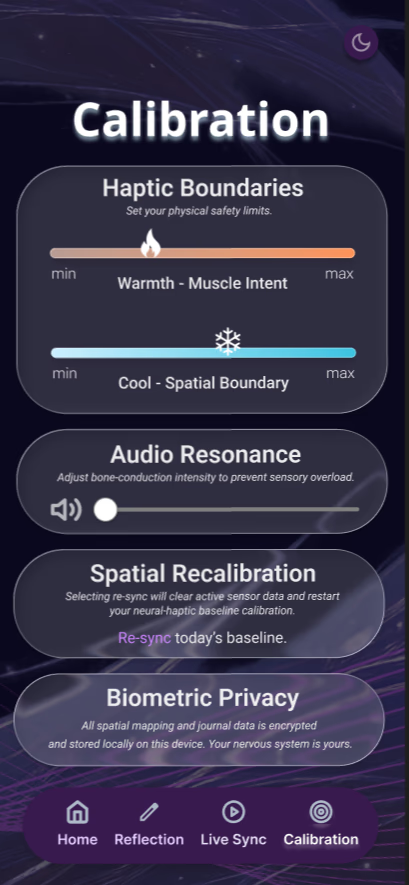
We moved into Figma to build the high-fidelity interface. The Neural Hub — the app's central dashboard — became the heart of the design, providing users with an immediate visual "receipt" of their movement and closing the feedback loop between mind and muscle. Hardware renders of the Ear Cuff and Haptic Patches were integrated alongside the UI to present a holistic, cohesive system.


Day 3 — Prototype & Submission
The final day was spent refining the interactive prototype, crafting the Devpost write-up, designing our presentation, and recording the app.
View on Devpost →Key Challenge
The biggest design hurdle was translating complex neurobiology into an interface that felt intuitive and safe — especially for TBI survivors. Standard "alarms" and "trackers" can trigger hyper-vigilance or fight-or-flight responses. We had to design around that.
The breakthrough was what we called Trauma-Informed Sensory Design: replacing jarring alerts with subtle haptic pulses and harmonic resonances. Every piece of feedback was designed to feel like a natural extension of the body — not an intrusive machine. That principle shaped every interaction, every animation, every sound cue in the system.
Outcomes
In 72 hours, we went from a blank canvas to a fully realized speculative medical ecosystem — wireframes, lofis, hifis, an interactive prototype, and a complete submission.